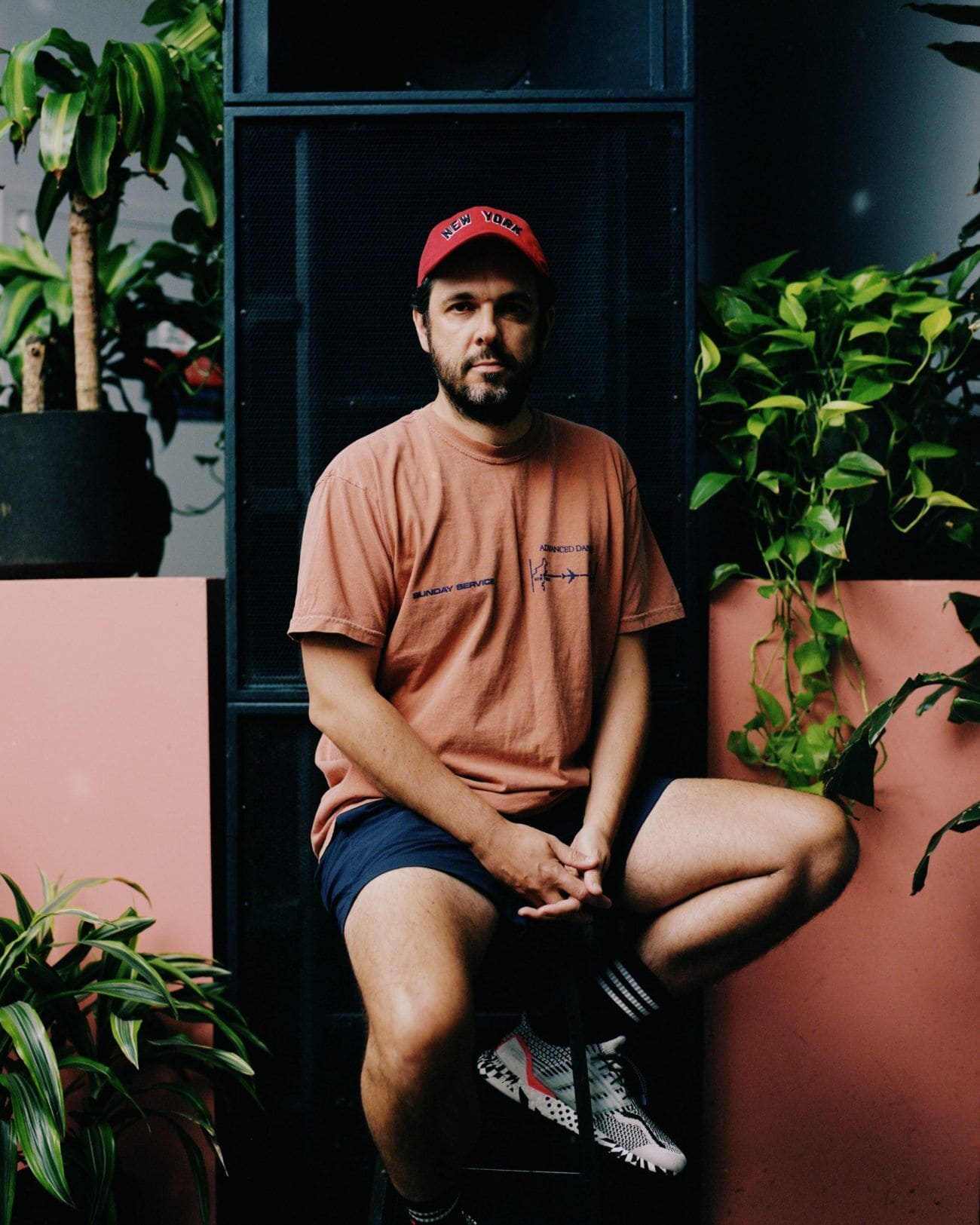
For more than two decades, Eamon Harkin has been quietly shaping how New York listens, dances, and comes together. As one half of Mister Saturday Night and Mister Sunday, and a co-founder of Planetarium and Nowadays, his work exists at the intersection of music, space, and social intention. These aren’t just parties or venues — they are frameworks for connection, places where strangers become a temporary community through sound.
Born in Derry and long settled in New York, Harkin’s path has been guided less by genre than by feeling: the emotional temperature of a room, the way a record can soften time or sharpen attention. That sensibility has carried through his DJ sets, his curatorial projects, and now, most clearly, into his new album The Place Where We Live.
Drawing from house, techno, and ambient forms, the album feels like a reflection on everything that happens before and after the dance floor — memory, stillness, belonging. Its title borrows from psychoanalyst D.W. Winnicott’s idea of a psychic space between inner and outer worlds, where art, play, and culture allow us to make meaning. For an immigrant who has helped define the sound of a city not originally his own, the idea of “where we live” resonates deeply.
In this Times & Tunes conversation, we spoke with Eamon about translating communal energy into solo work, the relationship between clubs and introspection, and the story behind the playlist he’s curated to accompany this interview — a selection of tracks that map the emotional terrain of his world, on and off the floor.
The Place Where We Live feels very personal, almost inward-facing, especially considering how much of your work has been about collective experience. What shifted for you in making this album?
For years, my work has centered on building collective experiences. That’s something I still hold as sacred — creating space for community, for shared energy and genuine connection. But sustaining that outward focus and all that comes with it can be exhausting. I reached a point where I needed something more private, something that wasn’t about holding a room but about understanding my own internal one. Writing and producing music by myself became that space.
I’ve lived in New York for 22 years, but consistent touring and the freedom to travel meant I never felt too far from Ireland, the UK, and Europe. I was always moving between those worlds. When the pandemic stopped that rhythm — and at the same time my life shifted into being more local, playing mainly at Nowadays and Planetarium, and raising young kids — I felt a real grief around that loss of connection. I was physically rooted in one place in a way I hadn’t been since moving to NY.
That experience shaped the album thematically and the process of witing and producing fed the need for a private process. It’s inward-facing because my life became more grounded and domestic, but also because I was processing distance — from movement, from certain communities, from versions of myself that didn’t exist anymore. The record reflects that recalibration: less about momentum, more about place, presence, and what remains when everything slows down.
The album title comes from Winnicott’s idea of a space between inner and outer worlds. How did that concept shape the way you approached the music — structurally or emotionally?
I read a fair amount of psychology books, and I became fascinated with the psycho analyst D.W. Winnicott’s idea that the space where we make sense of the world is the space of play and culture — not purely internal, not entirely external, but something in between. That really resonated with me, especially as a parent. You see how children use play to process reality, and Winnicott’s point is that as adults we’re still doing that — it just becomes art, music, culture.
That idea helped me understand what making this record really meant to me. It sits in that in-between space: between inner life and shared world, and for me personally, between New York — where I’ve lived for 22 years — and Ireland, which I felt newly distant from when touring stopped and my life became more rooted around home and my kids. There was a tension there — grounded but grieving movement — and that felt connected to Winnicott’s thinking.
It shaped some of music structurally too. I became more attentive to tone and mood, letting things feel exploratory rather than fixed.
You’ve spent years reading rooms as a DJ — sensing energy, tension, release. How did those instincts translate into the studio, where the “room” is imagined rather than physical?
I think the years of DJing have trained me to think in terms of energy curves — tension, release, density, negative space. In a club, you read that through bodies and body language. In the studio, I translate it into structure and sound design. On more ambient or reflective pieces, the movement is subtler. Instead of driving rhythm, it’s about pacing, harmonic tension, spatial depth.
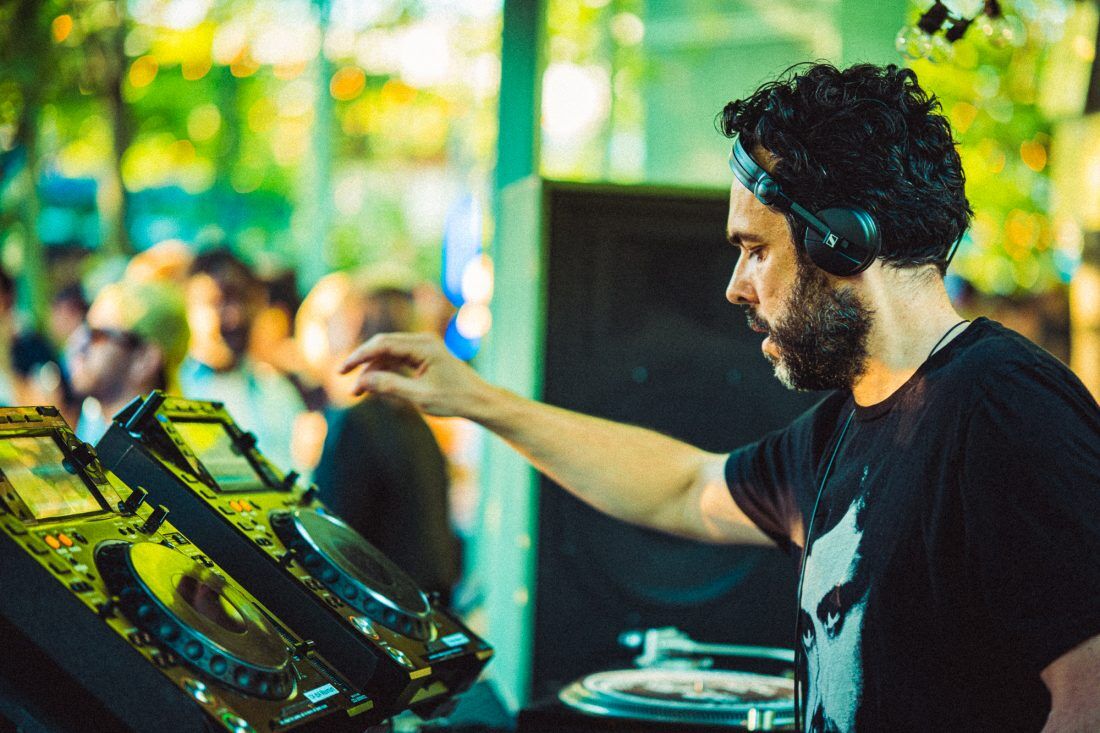
There’s a strong sense of memory running through the record — like club music seen through distance or time. Were you consciously working with nostalgia, or was it more about letting past experiences surface naturally?
I wasn’t trying to explicitly manufacture nostalgia but I do think it’s in there. If anything, I was more interested in emotional residue than specific memories.
Spending years in clubs and with electronic music leaves an imprint and those references naturally surface and with time fade a little. It was that experience that I was most interested in
A lot of the record plays with distance — using reverb, saturation, and degradation to blur edges, or letting motifs repeat in a slightly altered way, like memory looping but never landing the same twice. So the “nostalgia” isn’t a throwback move. It’s more about perspective — what club music feels like when you’re looking at it through time instead of standing in the middle of it.
You’ve helped build spaces like Nowadays that prioritize care, listening, and sustainability — not just musically, but socially. Do you see The Place Where We Live as part of that same ethos, just expressed differently?
Yes, I see them as connected.
Spaces like Nowadays are built around intention — how people move through them, how they feel, how energy is shaped over time. That thinking carries into the album.
The album is a different kind of space. It’s not physical, but it’s still structured. I thought a lot about pacing, dynamics, and emotional pressure — when to hold tension, when to let something open up. In that sense, it’s similar to programming a night.
I’m always trying to build environments rather than just tracks. Whether it’s a room full of people or someone listening alone, the goal is the same: create something people can step into and stay with.
Alongside the album, you’ve shared a playlist for this Times & Tunes feature. What role do playlists play for you compared to albums or DJ sets?
Playlists sit somewhere between albums and DJ sets for me. An album is a self-contained world with its own pure expression of art. A DJ set should be live and improvised — it’s shaped by a moment in time, in place in conversation with a certain set of people. A playlist is looser and freer. Playlists let you show adjacency — what you’re listening to, what’s influencing you indirectly. It’s less about narrative and more of a source map.
So this playlist is aimed at context. It traces some of the emotional and sonic threads around the record — things that informed it, things that sit next to it, or even things that contrast with it.
Can you tell us about the story behind the tracks you selected for the playlist?
The playlist pulls together a few long-running threads for me: minimal wave, ambient, instrumental music, and a deep obsession with electronic machine-made sound.
There’s an emotional through-line where the mechanical patterns carry a kind of humanity and vulnerability. That tension between circuitry and feeling is something I’m constantly drawn to.
You can spot the influence of Warp Records and the sounds of Detroit in there — I’ve featured artists who treated electronic production as both experimental and deeply expressive. Music that was/is futuristic but isn’t afraid to be vulnerable and emphasize texture, or introspection.
I wasn’t trying to guide listeners toward a single conclusion. More just to create a field of references — sounds that shaped me, and that echo through the album in different ways.
Planetarium invites people to lie down and listen, almost undoing the usual expectations of electronic music. Do you feel that kind of deep listening is becoming more important right now?
I do think deep listening feels more important right now. We live in a moment where our attention and opportunity to connect internally and externally is under threat. And so creating a setting where people can slow down and really focus on sound feels almost radical.
Planetarium flips the usual expectations of electronic music. Instead of forward momentum and physical release, it centers immersion and interiority. But that stillness, for me, isn’t the opposite of club culture – it’s part of its spectrum. Clubs have always been about altered states, about shifting perception. Sometimes that comes through intensity and movement; other times it comes through suspension and quiet. Stillness makes movement more meaningful.
Pre-order “The Place Where We Live”