
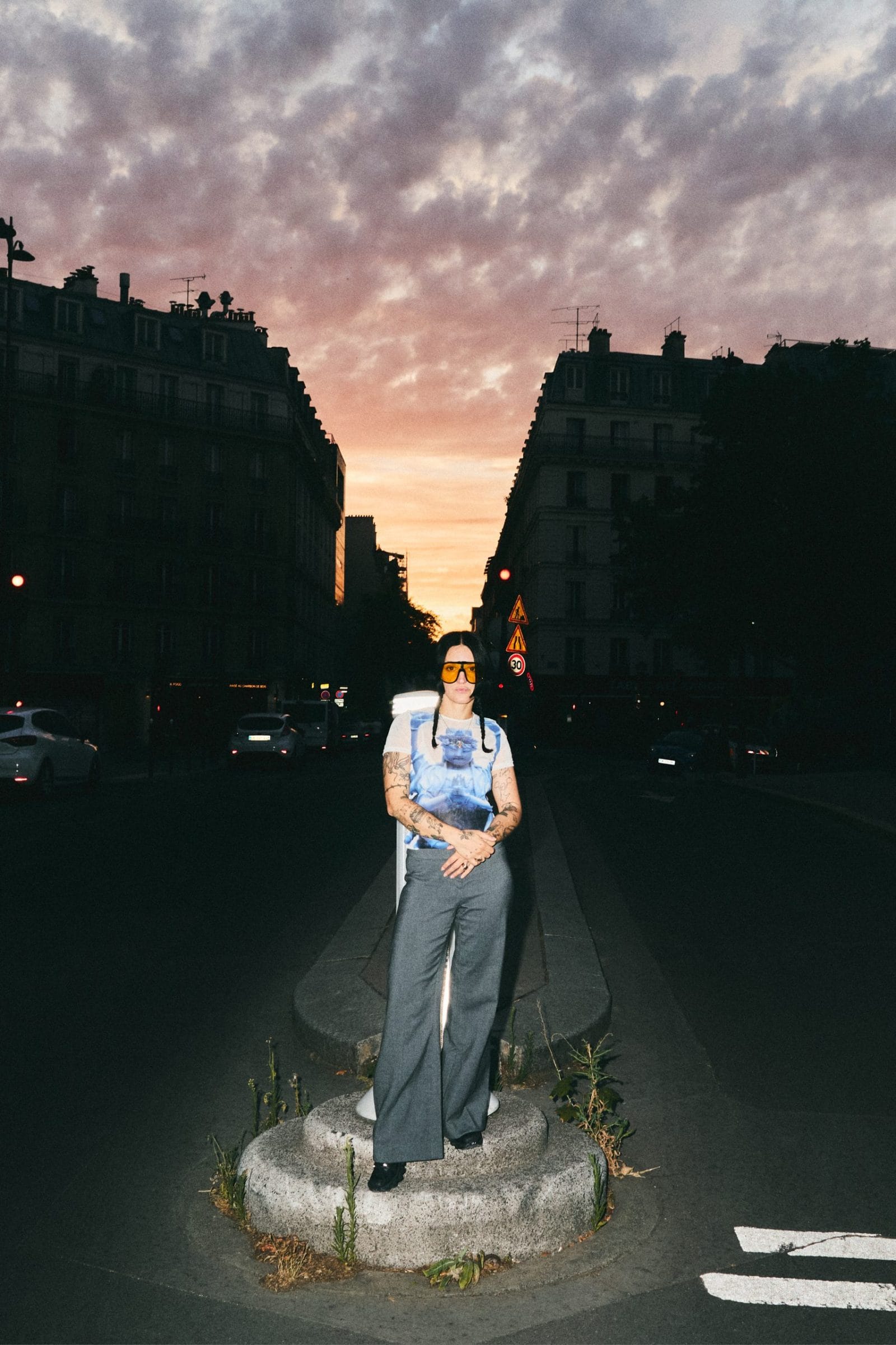
For Miley Serious, music has never been simply about staying within one lane. Moving between Paris and New York, the DJ, curator and founder of 99CTS RCRDS has spent more than a decade building a musical universe shaped by instinct, discovery and a deep attachment to underground culture. Her sets move freely through bass, breaks, jungle, techno, hardcore and experimental electronics, carrying traces of punk’s raw energy without ever becoming trapped by a particular genre.But Miley’s practice extends far beyond the DJ booth.
Since 2017, her label 99CTS RCRDS has operated as a constantly evolving archive of sounds, artists and ideas. Built around tapes, physical editions, zines and collaborations, the project has become a platform for emerging producers and music that might otherwise slip through the cracks. Its catalogue is deliberately difficult to reduce to a single sound — a reflection of Miley’s own approach to digging, where curiosity matters more than consistency and unexpected connections are part of the point.
That idea of discovery has always been central to her work. Miley has described DJing as a form of historical work: collecting fragments, tracing scenes and giving music a new context through selection. From her long-running presence on radio to residencies at Rex Club and appearances across international dancefloors, she has developed a style that feels both highly personal and constantly in motion.
For this edition of Times & Tunes, Miley Serious shares a playlist offering another way into that world. Rather than a DJ set built around a single moment or dancefloor, the selection becomes an opportunity to look at the music, memories and references that continue to shape her. We caught up with Miley to talk about digging as a creative practice, 99CTS as an evolving archive, the relationship between Paris and New York, and why staying curious might be more important than ever.
INTERVIEW
You’ve spent much of your career moving between different musical worlds — punk, bass, breaks, jungle, techno, hardcore and more. Do you remember when you first realised that you didn’t want to be defined by a single genre?
It’s funny because I remember growing up, you had to be a rocker, a goth, a skater, be into hip-hop, or not be into music at all. But then, I also don’t remember ever feeling like I had to fit into a box. I had the chance to grow up with brothers and a sister who were very curious and open-minded, so I was exposed to all these different influences from a young age. I guess it comes from that. I never, ever thought that I couldn’t be or listen to whatever I wanted. I just felt like I was all of these worlds at once, because I was also hanging out in all of these different communities, and they were my friends. I always felt that being true to what I liked was just it, it was just me
You’ve previously described yourself primarily as a DJ and a digger rather than a producer. What does digging mean to you today after so many years of collecting and playing music?
I’m absolutely not a producer. I’ve never produced electronic music, and I know I never will. I’ve always really cherished the work of a DJ. Digging has always been a very precious process for me. I don’t dig because of labels or because an artist is influential, that’s never been my approach. I’m usually drawn to a city first, the sociology of its scene, niche producers, and of course the projects behind certain artists and aliases… I love investigating when I dig, so I never really get tired of it. Kind of a detective of the underground.
You’ve once described DJing as a kind of historical practice. When you build a set, do you feel like you’re telling a story about music — or perhaps creating a new one through the way you place different records together?
In my opinion, you have to tell a story, but first of all, you have to know what you’re playing. You have to make sure that when you leave the booth, you can explain everything you played, why, who, where it comes from, and how it connects, tbh. I’m here to represent and honour music that might not be heard on a mainstream level, so you have to do it in the best way possible. And for me, that means knowing what you’re talking about.
As cringe as it sounds, it’s a journey through my knowledge and passion, and through a world you might not know.
99CTS RCRDS feels less like a conventional label and more like an extension of your own way of collecting and archiving things. You once compared it to the inside of your head. Has your understanding of what 99CTS has changed since you started it in 2017?
It is definitely my world, and I love it so much. And as for your first question, I don’t know why I would ever have felt forced to stick to one genre, when to me that would just take away all the freedom and make me sad. I see 99CTS RCRDS as a store with all these different shelves, where you can find so many different things, but somehow the whole thing still makes sense together.
No one stays the same.. or at least, I hope not. We all evolve, and it’s the same with my label. I started it in 2017. Back then, I wasn’t able to put out more than two tapes and zines a year. Now I can do more. It’s so hard to keep a label alive, but without it, I feel like I’d lose a part of myself.
It’s clearly something I can’t define much more than: welcome to my world, and I hope it inspires you.
One thing that stands out about the 99CTS catalogue is that it doesn’t seem interested in maintaining one easily identifiable “label sound.” Why has it been important for you to resist that idea?
This one could even apply to my own career as Miley Serious. People, especially bookers, are panicking because they can’t define what I play, and apparently it’s hard to define a curator / selector. My label is the same, why would I have to fit a demand? I’m the one investing in it, I take the risk, and my risk is giving a space to people I really love and believe in. It’s as simple as that.
I’m very in love with the scene. I logged onto SoundCloud when it started and never logged off, so I feel like I’m constantly moving and bouncing off the walls of this world of the internet and creativity. No limits for 99CTS RCRDS.
You’ve often used 99CTS to platform emerging artists or artists at important early moments in their development. What makes you want to take a chance on someone’s music?
I’m so happy you noticed that, because it’s actually a really important part of how I work. I’ve had artists on the label who have gone on to become bigger, and I’m so proud to have been able to give them a space at an earlier stage.
First of all, I only want to have someone on the label if there’s a real human connection. I need to know the people behind the music, to have some kind of relationship with them, because I want to be able to understand and talk about their world properly. The human side of it is incredibly important to me.
And honestly, most of my choices come down to one thing: I trust my gut. Music is obviously very subjective, but when I really believe in something, I get this rush of adrenaline. I’ll think about it for a few days, come back to it, and if I still feel that same excitement, then that’s my sign to go for it. I just go with my gut, that’s it.
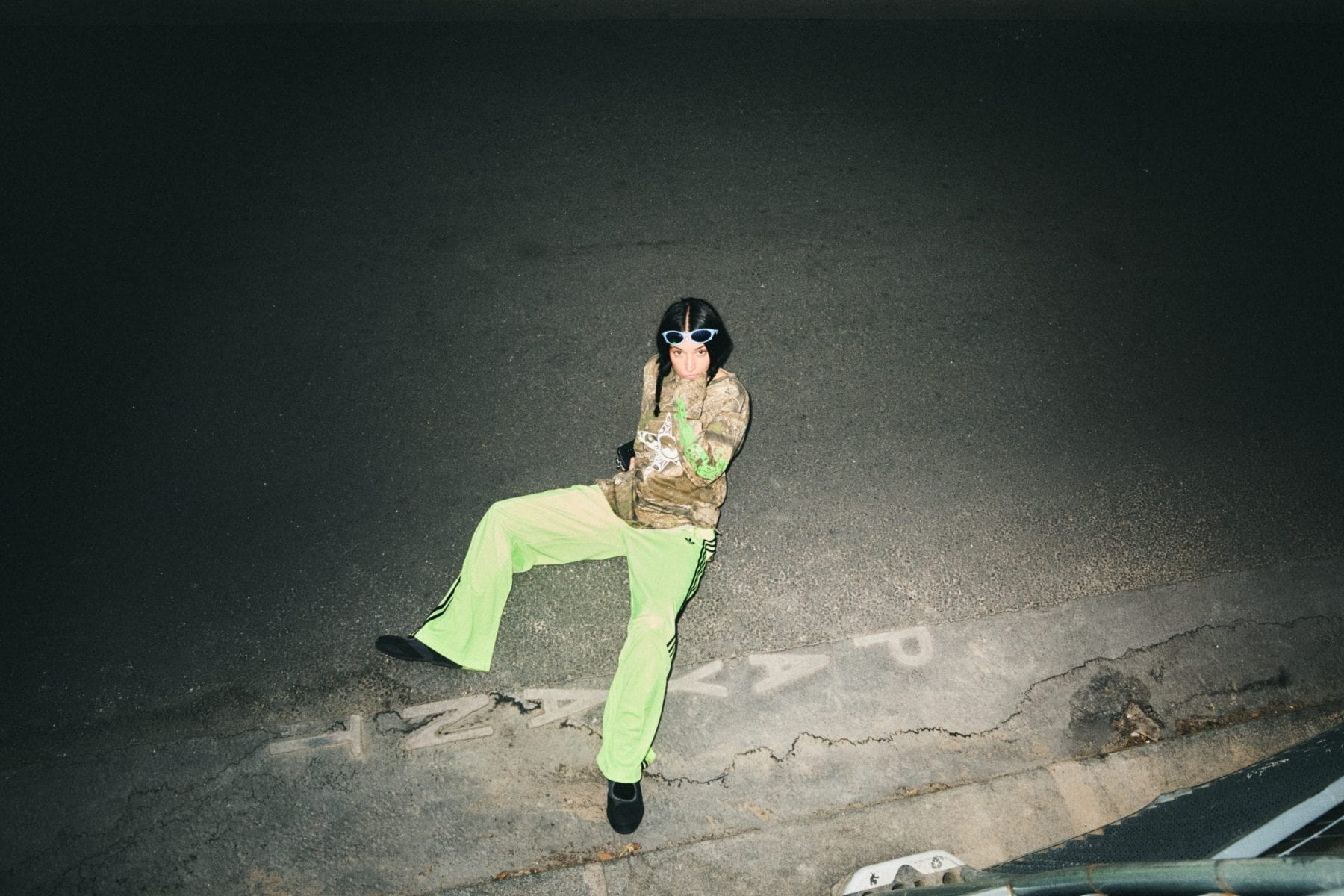
Your life and work have been shaped by both Paris and New York. How do those two cities feed into your musical identity?
Very interesting question, because I think the influence is musical, but for me it’s more about the energy than the scenes themselves. It’s about the way people work, create, and move in both cities. I could talk about it for hours, especially when it comes to NYC, because it’s so different from where I’m from, France.
Having the chance to live in the US has really reinforced my DIY energy and made me stronger in that way, while Paris gives me the calm and focus I need to work and lock in. So I guess I do become a slightly different version of myself depending on where I am, but I need both. I’m both.
I’m constantly learning from these places, and honestly, from everywhere I go. But the US scene has been my biggest love since I was young, so that energy has definitely stayed with me.
Your work still carries a strong DIY and punk sensibility, even when the music you’re playing comes from completely different worlds. What parts of that punk ethos have stayed with you over the years?
It’s always this word “punk,” but for me, it’s really about growing up around DIY and very independent scenes my whole life. I saw my big brother dubbing tapes with his band, making zines with his printer, my mum repairing things around the house or making things with her hands. They were the DIY essence of my life.
And then the communities and scenes I grew up around had me handing out flyers after school to announce shows, cooking for bands, making my own flyers, my own zines, carrying my vinyl in a broken suitcase. I only ever functioned this way, and honestly, I don’t really know any other way.
Alongside DJing and running 99CTS, you’ve also spent years working through radio, with your shows becoming another space for discovery and exchange. How does radio allow you to express something that the club doesn’t?
Radio is another free space i liiike so much. Entering my 10th year on rinse is amazing and it still feels like yesterday. Ive listen to radio my whole life and this is how i discovered and still discover stuff. Same as the whole discussion, what about music needs a limit ? Im a club dj forever through and through, but to love and understand me you have to see what im made of. My radio show is a deeper take about myself.
For Times & Tunes, you’ve put together a playlist rather than a continuous DJ mix. How did you approach this selection?
I sincerely put together what i listen to lately, I love to share where im at atm.
After more than a decade of DJing, running a label and moving between different scenes and cities, what still gives you that same feeling of excitement you had when you first started?
World is changing, music too, its evolving and there is always some niche and little pockets to explore or come from certain situations. Even if sometimes it feels a bit slow Im always excited about it.
I want to have an exhibitions of 99cts artists, I want a 99cts store, I want more collab but we have some amazing coming up next with the label.