

There is something deliberately elusive about Slimy Ape‘s music. Born in Leeds and now based in Manchester, the producer and DJ has been steadily developing a sound that sits somewhere between dubstep, dub techno, techno and UK bass, with a particular fascination for weight, space and the physical qualities of sound. His productions are built around details that reveal themselves gradually: deep bass pressure, clipped percussion, echoes disappearing into the distance, and rhythms that seem to shift between techno’s forward momentum and dubstep’s heavier, more spacious language. His influences range from Jamie xx and SBTRKT to the deeper traditions of UK bass music, but rather than reproducing those references, Slimy Ape uses them as raw material for something increasingly personal. That evolution has been particularly visible over the past couple of years. LDS, released through Sudo Sound in 2024, established a foundation in dubstep and bass-heavy experimentation. His 2025 Onstera EP on Menace pushed further into dubwise territory, balancing dub techno chords, UK-influenced rhythms and unusual textures. Earlier this year, he released Ode to 0113, his first independent offering and a deeply personal tribute to Leeds. Built around heavy bass weight, delay-drenched chords, driving drums and voices from figures within the city’s dub scene, the release connected his current sound to the musical environment that shaped him.
Now comes Invasive Species, his latest EP for Menace. Where Onstera embraced a more unpredictable and exploratory energy, the new record feels more deliberate: four tracks built for the deeper end of the dancefloor, moving between tuff four-to-the-floor rhythms, eerie breakbeats, electro-inflected drums and meditative dub techno. Across Flow State, Invasive Species, Twisted Root and Rumination, space becomes almost as important as the rhythm itself.
For this edition of MIXED BY, Slimy Ape brings us a mix that offers another window into that world. We caught up with him to talk about the new EP, the relationship between Leeds and Manchester, his obsession with space and dubwise production, and the process of finding his own place within the UK’s constantly evolving bass landscape.
INTERVIEW
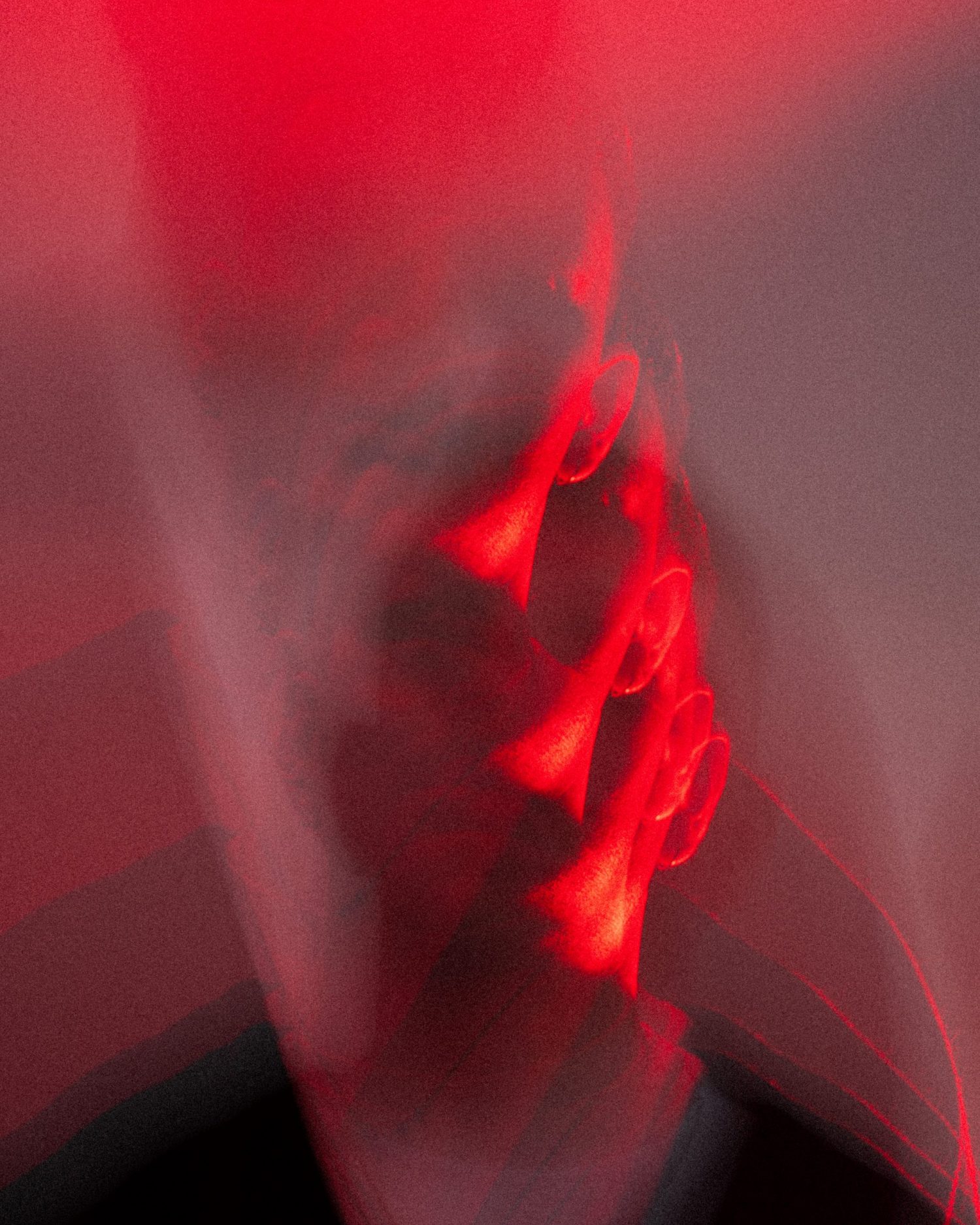
Invasive Species feels more focused and deliberate than Onstera, even though both records share a strong sense of experimentation. What changed in your approach between the two EPs?
Onstera was made at a time where I was chucking as many elements into a project as possible until it felt finished, with some of them serving little purpose.
After finishing Onstera, I listened to a podcast with Carrier where he spoke about how removing elements can help finish tracks. This helped me change my approach towards production and I decided to put more emphasis on the key elements I’d created for the track and create detail through continuous resampling and automation of these elements.
Flow State is built around a very direct 4/4 pulse, while tracks like Invasive Species and Twisted Root lean more heavily into broken rhythms. What determines the rhythmic framework of a track for you?
I start 50% of my tracks by finding a key piece of percussion to build a drum loop out of and then develop into a full idea. And I also actively try to make tracks with different drum patterns so I can experiment with different styles and approaches to tracks. I enjoy the challenge of trying something I’ve attempted before and building my own take of a track in that style.
I have other tracks which have been born out of resampling, creating a melodic loop, or sampling a vocal. I try not to focus my creation process around one route too much as this can limit you at times. My main focus when opening a new project is to experiment with as many potential ideas as possible and see what I like.
Your music seems to sit in an interesting space between dubstep, dub techno, techno and UK bass. Do you consciously think about genres when you’re producing, or are those boundaries becoming increasingly irrelevant to you?
As I’ve experimented more, I’ve found myself thinking about genre less and less. One of the reasons why I moved away from just strictly doing bass focused dubstep was getting bored of making music with a similar framework, and existing within this space has given me so much freedom to create.
I do however always try to keep elements of dub techno and dubstep in my tracks so they fit cohesively into my sound, but this can come in a variety of forms like dub automation, heavy use of reverb, sub heavy, etc.
You’ve described Ode to 0113 as a love letter to Leeds, with the city’s dub culture directly embedded into the record. How much does place influence your music?
I think I owe a lot to Leeds for my sound. I started producing when I went to university in Newcastle and back then I didn’t have a sound as such, I would just dart between whatever I was listening to at the time.
It wasn’t until I moved back to Leeds after finishing my degree, that I spent a lot more time going to dubstep nights (something which weren’t too common in Newcastle) as well as putting on my own nights. This is where I really settled on dubstep as a core sound, and gave me a base to work from.
Even just visiting a place can influence my music too. I recently got back from a trip travelling South Korea and that has really influenced my productions since. The first track in the mix ‘Cotton Bud’ was one of the first songs I made after getting back, and was inspired by the coastline I explored in my time in Busan.

Invasive Species by Slimy Ape on Menace
You’re now based in Manchester, another city with an enormous musical identity. Has moving from Leeds to Manchester changed your relationship with UK club culture?
Manchester has definitely introduced me to a lot of different sounds over the years, especially through going to nights at Soup and White Hotel. I think this has definitely translated over into my music, and widened the sounds I’m interested in and take inspiration from. It’s a really exciting city to live in music-wise, with great events happening on a consistent basis.
As much as I love Leeds as a city, the club scene there has taken a heavy hit with spaces like Old Red Bus Station and Wire closing within recent years. There’s currently a lack of events there outside the mainstream stream of artists that consistently tour, and the city is greatly missing the previously mentioned spaces which would be spaces for tons of grassroots nights and artists coming up.
That being said, Subdub is still consistently putting on great nights for many years and their recent events have been some of my favourites I’ve been to. And Mesh Radio which started last year has created a platform to help grow Leeds based DJs, there’s definitely still loads of positives to be offered by the Leeds scene.
There’s a certain tension in your music between something very physical — heavy bass, weight and pressure — and something much more atmospheric and introspective. Where does that balance come from?
I try to balance making music for the club and making music that can be listened to in everyday life whether that’s at home, at the gym, on a hike, etc. As most listeners of dance music spend more time listening to music outside of the club than in it, I think it’s important to strike a balance between the two environments.
I always love building atmosphere in a tune too, it’s an area where you can create really interesting details which can make a track stand out, both in a club and outside in life. It’s something I heavily explored in my last EP on Osmura ‘This Space has a Warm Hold’ and something I’m sure will remain a part of my productions in the future.
Your recent releases suggest you’re becoming increasingly interested in restraint. Rather than constantly adding elements, you seem to let a small number of sounds carry a lot of weight. Has your approach to “less is more” changed over the years?
When I first started producing the style of music I make, I used to have so much going on at times when it wasn’t really needed. It was when I was going back to these tracks to mix them down for releases months later that I realised that I could strip these down and be more purposeful with the layers that I choose.
Whilst I do still have a lot of layers in my tracks, I really try to take into account giving elements room to have their intended impact and not just have them disappear into a wall of sound.
Rumination, the closing track on Invasive Species, feels particularly inward-looking — almost meditative despite being designed for the dancefloor. Do you see introspection and club music as naturally connected?
I find more introspective tracks in the middle of a set can help provide a moment of calmness, which helps make the set more of a journey. A lot of times these can be really standout moments for me in a set too. One that always sticks with me is Coki dropping ‘Cay’s Crays Digital Mystikz Version’ after 30 minutes of drop heavy dubstep. It was a real moment of calm amongst the storm.
Rumination was born out of those moments in a heavily smoked out dancefloor, something which I’ve experienced a lot at White Hotel (to the point where you can’t even see your mates next to you). Those moments almost give you a moment to process and reflect on what’s happened so far musically.

For this MIXED BY feature, how did you approach building the mix?
With Invasive Species being more focused on the dubbier side of my sound, I wanted to build a mix around this and build up into faster paced, bass heavier cuts as the mix went on.
As with all my mixes or sets that I play, I always make sure to include tracks from friends as well as recent bits I’ve found through bandcamp, searching soundcloud, or from listening to other mixes myself.
Is there a particular idea or journey behind the tracks you’ve selected for the mix?
I spend a lot of time walking and cycling around Manchester city centre, and I wanted to create a mix that would fit into everyday life yet still have a club focus.
This mix is also how I envision I’d open up for a night currently, lots of nice spaced dubbed cuts and slowly picking up the pace throughout the mix. There’s a lot of really interesting music that fits into this type of mix right now.
Looking at the progression from LDS to Onstera, Ode to 0113 and now Invasive Species, it feels like you’re gradually developing a very distinctive language around bass, rhythm and space. Do you feel you’ve found the sound you’re looking for, or does finding it mean constantly moving away from it?
Looking back on releases like LDS, I remember feeling a slight lack of connection to the tracks in them. I was happy with the music at the time, but it didn’t truly feel like what I wanted to make.
As soon as I started experimenting more, I think I really found the sound I was wanting to make all along and that resonated more with my introduction to electronic music through Post Dubstep. Part of this sound is constant experimentation so in a way it’s a consistent exploration of thinking what other elements I can add to it, how can I introduce new elements and techniques.
As for my future productions, I’ve been using a lot more distortion and texture in my music as well as changing up the BPM quite a lot. I’ve been making lots of new music this year using these techniques that I’m excited to get out over the course of 2027 and beyond.
Pre-order “Invasive Species” on Bandcamp.